
What We Do
Shire Valley Kalondolondo combines advocacy, direct services, and development support to advance sexual and reproductive health and rights in Nkhotakota and Thyolo. We work alongside communities to strengthen health systems, protect women's rights, and build sustainable change.
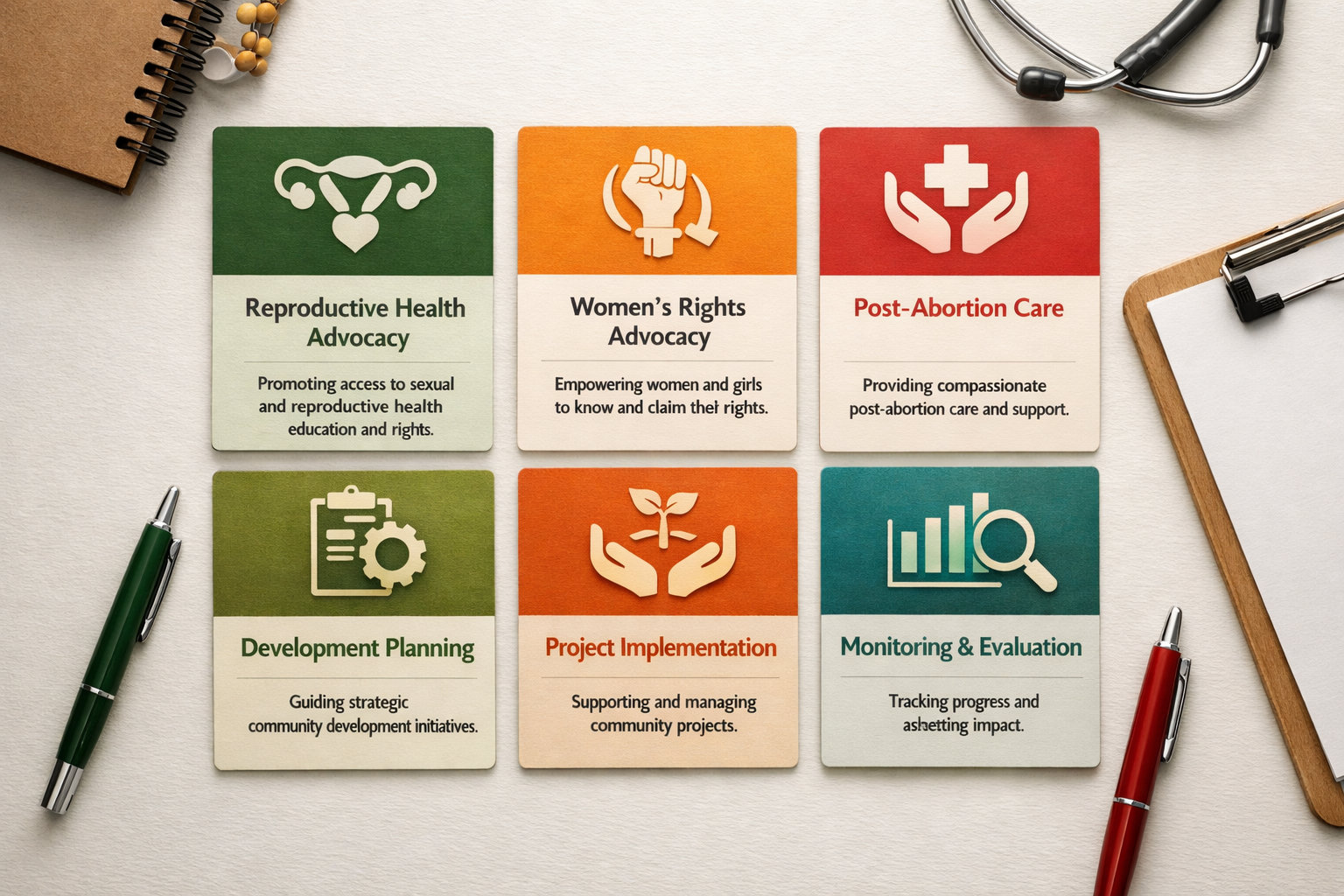
Advocacy for Reproductive Health
We work with communities and health systems to improve access to contraception, family planning, maternal health, and sexual health information. Our advocacy removes barriers to care and strengthens health service delivery.
For: Women, girls, health providers, and communities
Advocacy for Women's Rights
We advance gender equality and women's rights through community mobilization, policy advocacy, and legal literacy. We support women's voice, decision-making power, and freedom from gender-based violence.
For: Women-led organizations, communities, and advocates
Post-Abortion Care Services
We provide compassionate, non-judgmental support including medical care, counseling, contraceptive information, and community referral. We reduce stigma and ensure access to essential post-abortion care.
For: Women needing post-abortion support and care
Development Planning Support
We help communities and organizations design effective programs, set strategic goals, and create action plans. Our planning support builds local capacity for sustainable, community-led development.
For: Community groups, organizations, and partners
Development Implementation Support
We support successful program execution through training, resource coordination, and problem-solving. Our implementation support ensures programs run effectively and achieve intended outcomes.
For: Programs and organizations in execution phase
Development Monitoring Support
We help establish systems to track progress, measure impact, and improve programs. Our monitoring support enables evidence-based decision-making and continuous learning.
For: Organizations seeking to measure and improve impact
All services are available in Nkhotakota and Thyolo districts. We work with communities, health systems, and partners to create lasting change in sexual and reproductive health and women's rights.
Learn How to Access ServicesReproductive Health Advocacy
We work directly with communities and health systems in Nkhotakota and Thyolo to remove barriers to reproductive health care, expand access to information and services, and ensure women and girls can make informed decisions about their bodies and futures.
What is Reproductive Health Advocacy?
Reproductive health advocacy means working to ensure that every person has access to the information, services, and support they need to make decisions about their sexual and reproductive lives. It's about removing barriers—whether those are financial, geographic, informational, or social—that prevent people from accessing care.
In Nkhotakota and Thyolo, we advocate for better access to contraception, family planning services, maternal health care, sexual health education, and removal of stigma and discrimination in health systems. We work with communities to understand their needs and with health providers to improve the quality and accessibility of services.
Advocacy isn't just about policy—it's about real people getting the care they need, when they need it, without judgment or barriers.
Health as a Right
Reproductive health is a human right, not a privilege.
Community-Led
Communities know their own needs best—we listen and support.
Barrier Removal
We identify and remove obstacles to care and information.
Key Issues We Address
Contraception & Family Planning
We advocate for expanded access to modern contraceptive methods, family planning information, and support for women to make informed choices about if and when to have children.
Maternal Health & Pregnancy
We work to ensure pregnant women have access to quality prenatal care, safe delivery services, and post-natal support to protect their health and their babies' wellbeing.
Sexual Health Education
Young people deserve accurate, age-appropriate information about sexual health, relationships, consent, and safety. We advocate for comprehensive sexual health education in schools and communities.
Health System Strengthening
We work with health facilities and providers to improve the quality of reproductive health services, reduce stigma, and ensure services are responsive to community needs.
Removal of Barriers
Financial cost, distance, stigma, and misinformation prevent access to care. We identify and work to remove these barriers so communities can access the services they need.
Community Engagement
We engage community leaders, youth, health workers, and women themselves to build local momentum for reproductive health advocacy and sustainable change.
How We Work
Listen & Learn
We start by listening to communities in Nkhotakota and Thyolo. What are the barriers they face? What do they need? What solutions do they already have? We ground our advocacy in real community experiences, not assumptions.
Organize & Advocate
We bring communities together to advocate for change—whether that's with health facilities, local government, or national policymakers. We use evidence, community voices, and strategic action to push for better policies and practices.
Support & Enable
We provide training, resources, and ongoing support to community advocates, health providers, and partners so they can continue the work themselves. Sustainable change comes from local leadership.
Monitor & Learn
We track what's working, what's not, and why. We use data and community feedback to adjust our approach and ensure our advocacy is creating real change in women's and girls' access to reproductive health care.
Partnership & Collaboration
Our advocacy work is stronger when we partner with others. We collaborate with:
Health Facilities
To improve service quality, reduce stigma, and strengthen provider capacity.
Community Leaders
To build local ownership and ensure advocacy reflects community priorities.
Government Partners
To influence policy and ensure government commitment to reproductive health.
Other Organizations
To amplify voices and coordinate advocacy across Malawi's SRHR movement.
What We're Working Toward
Expanded Access
More women and girls in Nkhotakota and Thyolo have access to the full range of reproductive health services, information, and support they need to make informed decisions.
Reduced Stigma
Health systems and communities become more supportive and non-judgmental about reproductive health, so people feel safe seeking care without fear of discrimination.
Strengthened Systems
Health facilities have the resources, training, and systems they need to provide quality reproductive health services that respond to community needs.
Local Leadership
Communities and local organizations lead their own advocacy work, ensuring that reproductive health priorities are driven by those most affected.
Want to Learn More?
If you have questions about our reproductive health advocacy work or want to discuss how we can support your community, health facility, or organization, we'd like to hear from you.
Women's Rights Advocacy
At Shire Valley Kalondolondo Programme, we believe women's rights are human rights. We work alongside women and girls in Nkhotakota and Thyolo to claim and exercise their fundamental rights—to make decisions about their own bodies, to participate fully in community life, and to live free from violence and discrimination.
Rights We Advocate For
- Bodily autonomy: The right to make decisions about your own body and reproductive health
- Decision-making power: A voice in family, community, and health decisions that affect your life
- Freedom from violence: Protection from gender-based violence and harmful practices
- Economic rights: Access to education, employment, and financial independence
- Legal rights: Equal protection under the law and access to justice
How We Work
We don't impose change from outside—we mobilize communities to claim their own rights. Our advocacy combines:
- Community mobilization: Bringing women together to understand their rights and organize for change
- Legal literacy: Helping women understand the laws that protect them
- Policy advocacy: Working with government and health systems to strengthen protections and services
- Supporting women-led movements: Strengthening organizations led by and for women
The Barriers We Address
In Nkhotakota and Thyolo, women face real barriers to exercising their rights: limited access to education, early marriage, gender-based violence, restrictions on economic participation, and limited awareness of legal protections. We work to remove these barriers through community dialogue, advocacy, and partnership with local leaders and institutions.
"Women's rights aren't negotiable—they're the foundation of healthy, equitable communities. When women can make decisions about their own lives, entire communities thrive."

Post-Abortion Care Services
Access to compassionate, confidential post-abortion care is essential healthcare. We provide comprehensive support—medical care, counseling, contraceptive information, and community support—to every person who needs it, without judgment.
What is Post-Abortion Care?
Post-abortion care (PAC) is comprehensive healthcare provided after an abortion—whether the abortion was safe or unsafe, spontaneous (miscarriage), or induced. PAC addresses both the medical and emotional needs of people who have experienced abortion.
In Malawi, access to quality PAC remains limited. Many health facilities lack supplies, training, and a non-judgmental approach. Stigma and fear of legal consequences prevent people from seeking care. The result: preventable complications, emotional distress, and loss of trust in the health system.
PAC is not about judgment. It's about ensuring every person has access to the healthcare they deserve—and the information they need to make informed decisions about their future.
Why Post-Abortion Care Matters
Medical Complications
Abortion complications—infection, bleeding, incomplete abortion—can be life-threatening without prompt treatment. PAC ensures these complications are identified and treated quickly and safely.
Emotional Support
Abortion is an emotional experience. Some people feel relief, others feel sadness or guilt. PAC includes counseling and support to help people process their experience and move forward.
Contraceptive Counseling
PAC is an opportunity to discuss contraception and family planning. We provide information about all available options—so people can choose what works for their life and goals.
Reducing Stigma
Stigma prevents people from seeking care. By providing compassionate, non-judgmental PAC, we send a clear message: your health matters, and you deserve care.
What We Provide
Medical Assessment & Care
We work with health facilities to ensure people receive thorough medical evaluation, treatment of complications, and appropriate referrals. This includes access to antibiotics, pain management, and emergency care if needed.
- Clinical assessment for complications
- Treatment of infection, bleeding, and other complications
- Emergency referral for severe complications
Counseling & Emotional Support
We provide trained counselors who listen without judgment and help people process their experience, make sense of their feelings, and plan for the future.
- Individual and group counseling
- Peer support and community connection
- Referral to mental health services if needed
Contraceptive Counseling & Access
PAC is an opportunity to discuss family planning. We provide evidence-based information about all contraceptive options—including long-acting reversible contraception (LARC)—and help people choose what works best for them.
- Information about contraceptive options
- Access to contraceptive methods including IUDs and implants
- Follow-up support and method switching if needed
Community Support & Referral Pathways
PAC doesn't end at the health facility. We connect people with community resources, peer support groups, and other services they may need—legal support, economic assistance, social services.
- Connection to community-based organizations and support groups
- Referral to legal, economic, and social services
- Follow-up care and ongoing support
How We Work to Improve PAC
Health System Strengthening
We work with health facilities and health workers to improve PAC quality—through training, supply provision, protocol development, and advocacy for better systems and policies.
Stigma Reduction & Community Engagement
We work with communities to reduce stigma around abortion and PAC—through dialogue, education, and visibility. We help communities understand that PAC is healthcare, not judgment.
Policy & Advocacy
We advocate for policies and laws that protect access to PAC and ensure that all people can receive the care they need without fear of legal consequences or discrimination.
Ensuring Access & Quality
We monitor PAC access and quality in Nkhotakota and Thyolo, identify gaps, and work to fill them—ensuring every person can access the care they deserve.
Our Principles
Confidentiality & Safety
Your privacy is protected. We maintain strict confidentiality and ensure your safety in all interactions.
Compassion & Non-Judgment
We provide care without judgment. Your choices are your own, and we respect them.
Information & Choice
We provide evidence-based information about all options so you can make informed decisions about your health.
Accessible & Affordable
PAC should be accessible to everyone, regardless of income or location. We work to remove barriers to care.
Common Questions About PAC
Is post-abortion care the same as abortion services?
No. Post-abortion care is healthcare provided after an abortion has occurred. It addresses medical complications and emotional needs. It is not abortion provision. PAC is a standard healthcare service provided in all health systems worldwide.
Is PAC confidential?
Yes. Your privacy is protected. We maintain strict confidentiality about all interactions and do not share information without your consent. You can access PAC safely and without fear.
What if I'm afraid of legal consequences?
Healthcare providers have a responsibility to provide PAC to anyone who needs it, regardless of how the abortion occurred. We advocate for your right to access healthcare without fear. If you have concerns, we can discuss them confidentially.
How long does post-abortion care take?
Medical care may take a few hours, depending on what treatment you need. Counseling and contraceptive counseling can happen during that visit or in follow-up appointments. We work with your timeline and schedule.
What if I need help after my PAC visit?
We provide follow-up support. If you have questions, complications, or need additional help, we are here. You can reach out anytime. We also connect you with community resources and ongoing support.
Can I choose a contraceptive method during PAC?
Yes. We provide information about all contraceptive options and can help you start a method right away if you choose. Some methods can be inserted immediately after abortion. Others can be started at a follow-up visit.
Need Post-Abortion Care?
You deserve compassionate, confidential healthcare. Contact us today to access PAC services or speak with someone who can help.
Access Support